

Religion as a Firmware Part 1
…to improve financial returns in Kenya and beyond

Founder Anne has to decide whether to use company funds from an investor to pay for her aunt’s surgery.
In her mind, its not really stealing. She’ll refund the money before anyone notices. And she is repaying a debt: this aunt helped raise her, paid school fees, sent money when no one else did. Without that aunt, there may be no founder, no business, no investor deck, no “Africa rising” story.
The family calls it responsibility.
Now the founder has access to cash, and the aunt is sick.
Who is right?
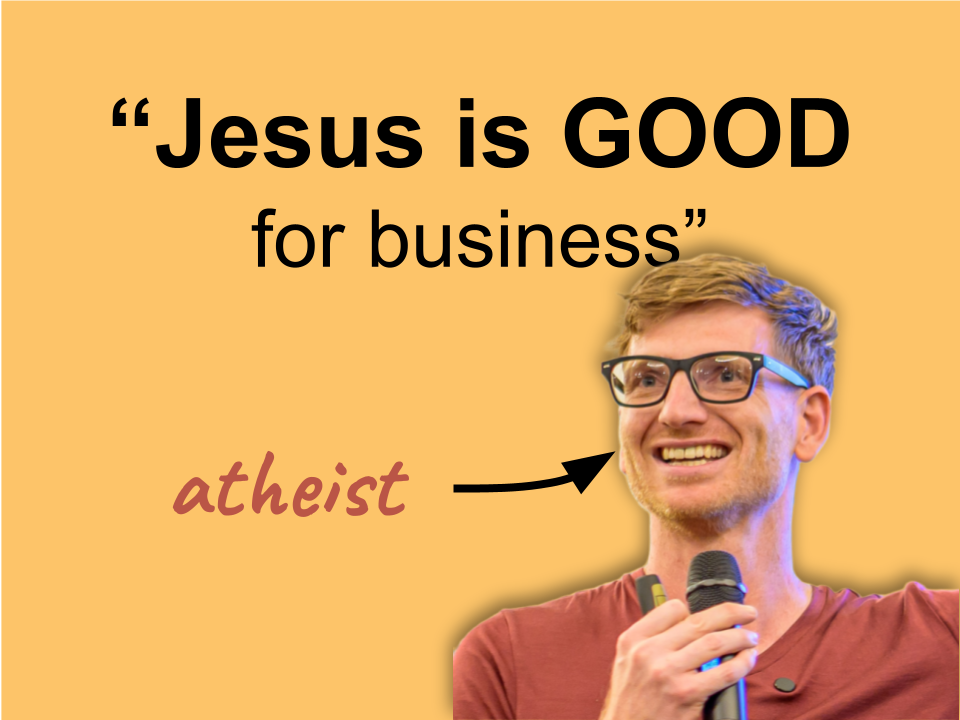
Jesus is good for business. No, I don’t mean that the way that some unscrupulous pastors use it to scam people (which can happen), but that the ethics of the New Testament laid the groundwork for the world economy to thrive. I’m an atheist, but a “Christian Atheist”--meaning the miracles like water into wine I see more as a metaphor, than a fact. But the values like the Golden Rule are essential for a productive business environment.
I’m also the founder of Kuzana, an acceleration and investment firm for “boring” business in Kenya like avocado export, women’s fashion and roofing materials. In this essay, I’ll show how Religion as a Firmware can help you make more profitable investments in frontier markets.
1. Government vs. Private sector corruption, which is greater?
We like to point fingers at the government of Kenya, but that is an easy target. The government won’t sue you for badmouthing; private companies will.
The result: private sector corruption goes under appreciated.
Let’s take Anne. Anne wants to sell her carrots to Mufasa Hotels. If she wants her invoice paid she needs to give a kick back to Ben in finance. Corruption goes right to the top.
When Ben moves from Mufasa to Simba Hotels he knows Anne’s carrots go for Ksh100 a kg. But Simba was paying Ksh120. He says “I’ll buy your carrots… if you charge Simba Ksh120 and give me a ksh20 kickback.
What should Anne do?
It’s not just carrot procurement that Simba Hotels has an issue with: Staff aren’t trusted so more is spent on internal auditors. The police aren’t trusted so private security is needed and expensive walls built. The water and electricity cannot be trusted so large storage tanks and back up power are required.
But it gets more complicated: when Anne starts selling to Simba Hotels the payment terms are 7 days, which makes sense because it will take 7 days before Simba is able to put those carrots in a stew and get paid by the customer. But then Ben in Finance delays payment to 30, 60, 90 days. Why? It doesn’t take that long for the carrot to turn into cash.
Ben might use just a liiiiitle bit of this float to pay for his aunt’s medical bills without getting caught. Simba Hotels can still function because it doesn’t run out of cash if he keeps pushing out the payment terms.
Of course, eventually Ben, the finance manager, gets caught and fired quietly so as not to disrupt the Simba Hotels brand. No charges are brought to court and Ben gets another job at Pumba Safari Lodge. The cycle continues…
Why does this happen?
There is short term thinking, sure. I need to pay school fees or build a house or pay off gambling debts.
Raises are few and far between, salaries are low so if Ben wants to progress in life the only way—he feels—is to steal.
But it goes deeper.
Tribalism explains a lot:
Me and mine.
“Me stealing today is bad” doesn’t register for Ben. He’s not stealing, he’s helping his aunt get medical treatment. And anyways the company is owned by [x tribe] and everyone knows they stole from Ben’s family in 1992. And Ben can see the owner is using company money to pay for his kids’ fancy private school.
Ben doesn’t have a lot of loyalty to the company paying his salary, he doesn’t realize that when he steals from the hotel Ben is making everyone pay more for a burger—business ethics are not considered. “If I didn’t do it the next person would; and I’m sure the owner is cutting corners, too,” he reassures himself.
Besides, Black Tax: his aunt helped his parents when he was little. Now he’s in the city and his aunt expects him to take care of her. It would be embarrassing not to help her. Plus, he wants to show up at Christmas with a new car to show his family that their hard work to pay for his education paid off.
What’s more important, his aunt or a faceless company run by people from a tribe he’s been taught to despise?
How have other countries created a more trusting business environment?
See the answer next week here.
How do live players build high-trust institutions inside low-trust states?
In low-trust states, national reform is too slow and donor reform is too fake. The fastest path is for live players, especially founders and investors, to build small institutions where trust, competence, discipline, and reputation are locally enforceable. These micro-institutions, guilds, can later network together into a higher-trust economy.
This is the idea behind our investment firm, Kuzana.co.